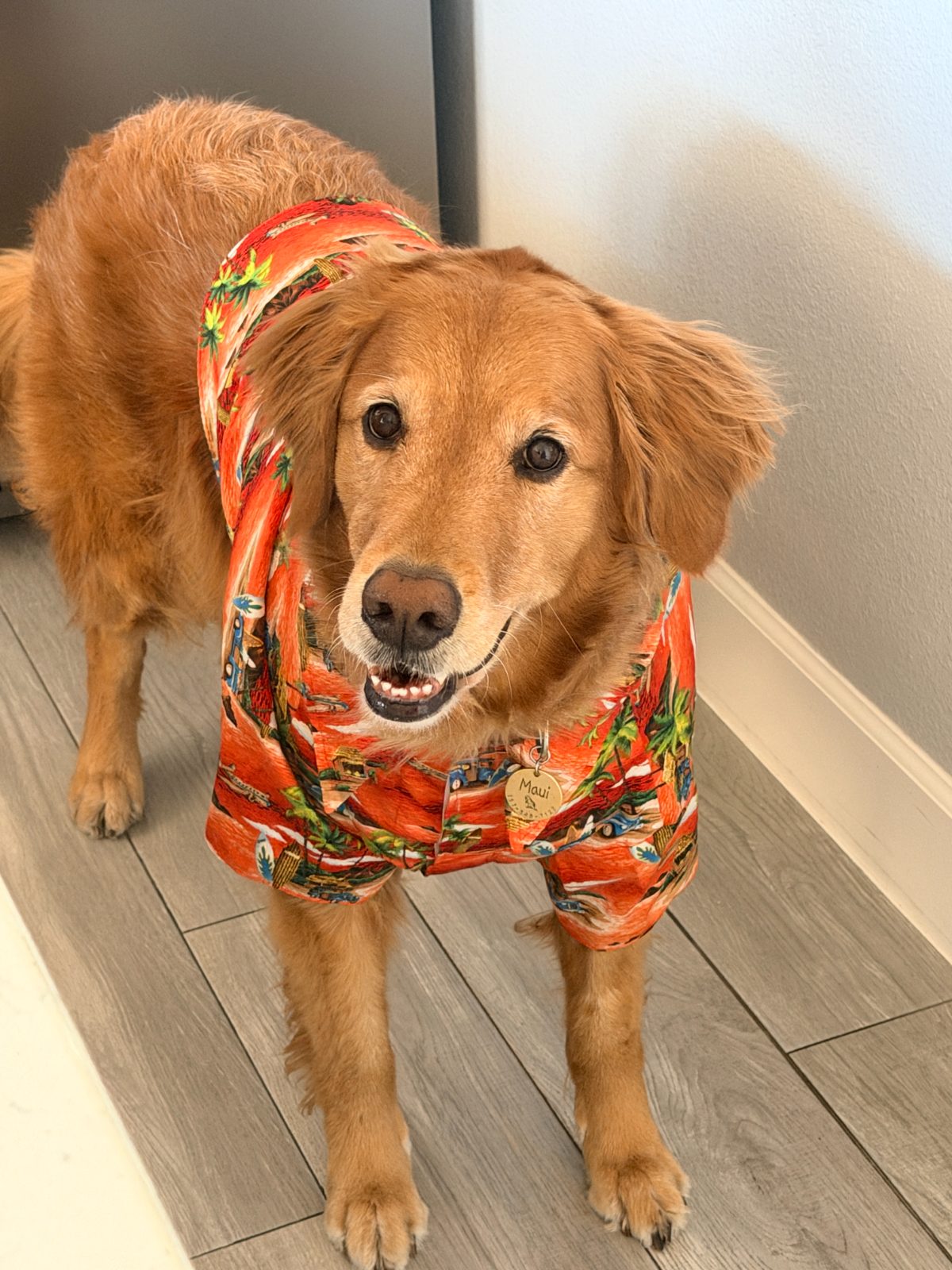
Maui arrived in a Hawaiian shirt. That detail matters more than it sounds, because the first thing a therapy dog does in a memory care home is give everyone something easy to talk about. Within a minute, a resident who rarely starts conversations was telling his handler about a dog she'd had in the sixties.
We hosted a therapy dog visit this fall, and it went well enough that we wanted to write about it, both to share the photos and to explain why these visits do more than make a pleasant afternoon.
What actually happened
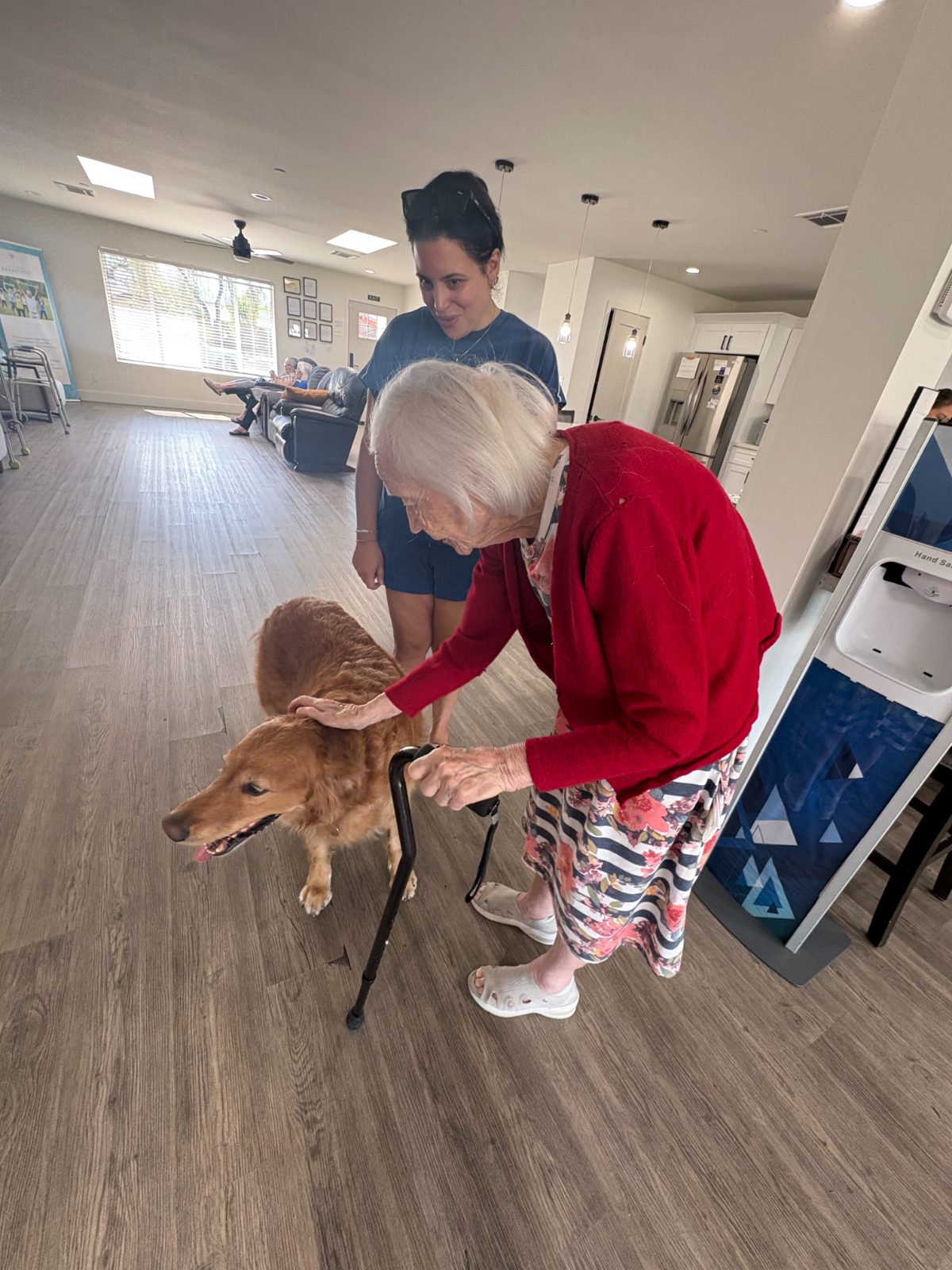
Maui is a golden retriever, calm and unhurried, with a handler who understands how to let residents set the pace. Some wanted him in their lap. Some wanted him at arm's length. One resident, who uses a cane and is careful about her balance, stood and reached down to him anyway, steadied by a caregiver, because she wanted to pet him properly rather than from a chair.
He made his way through the living room, the dining room, and out to the backyard turf, where he ran laps while residents watched from the shade. Then he came back in and lay down beside a recliner for a long while with a resident who doesn't say much but kept her hand on his head the whole time.
A resident who rarely starts conversations spent ten minutes telling the handler about a dog she'd had in the sixties.
Why this works for people with dementia
Animal-assisted visits have a real evidence base in dementia care, and the mechanism is fairly simple. A dog doesn't require the things dementia takes away. He doesn't need you to remember his name, follow a conversation, or recall what day it is. Touch, warmth, and the simple act of stroking fur are available to someone at any stage of the disease.
Several things tend to happen during a visit, and we saw all of them:
- Agitation drops. Residents who are restless in the afternoon often settle when an animal is in the room. The dog gives the hands something to do and the attention somewhere to go.
- Long-term memory surfaces. Pets are tied to deep, early memories. A dog in the room reliably brings out stories about childhood pets, farms, and family animals, told with detail that surprises families.
- Residents talk to each other. A shared focus gives people who sit near each other every day a reason to speak. The dog is a subject everyone has an opinion about.
- Movement happens without being asked. Reaching, bending, standing to follow the dog across the room. It's physical activity nobody has to be coaxed into.
- Mood lifts for hours. The effect doesn't end when the dog leaves. Staff noticed an easier evening after the visit, which is not a small thing in a memory care home, where late afternoons are often the hardest hours.
Why a small home makes it better
In a large facility, a therapy dog visit is often a scheduled event in a common room: residents are brought in, the dog makes a circuit, and people are brought back out. In a house with ten residents, the dog simply spends the afternoon. He wanders. He finds the people who want him. Someone who isn't interested at two o'clock can change her mind at three.
It also means the handler gets to know each resident. By the end of the visit she knew who liked him in her lap and who preferred to watch from across the room, and that knowledge carries into the next visit.
What families can do
If your loved one responds well to animals, tell the home. Most small homes can arrange visits, and some welcome well-behaved family pets during regular visiting hours. Bring photos of the pets your family member had. Those pictures reliably open conversations that other prompts don't.
If you're touring homes, ask what the activity calendar actually looks like week to week, and whether animal visits are part of it. The answer tells you something about whether a home is thinking about residents' days or just filling them. We've written more about what to look for on a memory care tour, and about why a small home changes what a day can look like.
The bottom line
A dog in a Hawaiian shirt is a small thing. What it produced, a calmer afternoon, stories we hadn't heard before, residents reaching for something they wanted, is not. Animal visits work because they ask nothing of the person and give a great deal back.
Maui will be back. We'll post photos when he is.