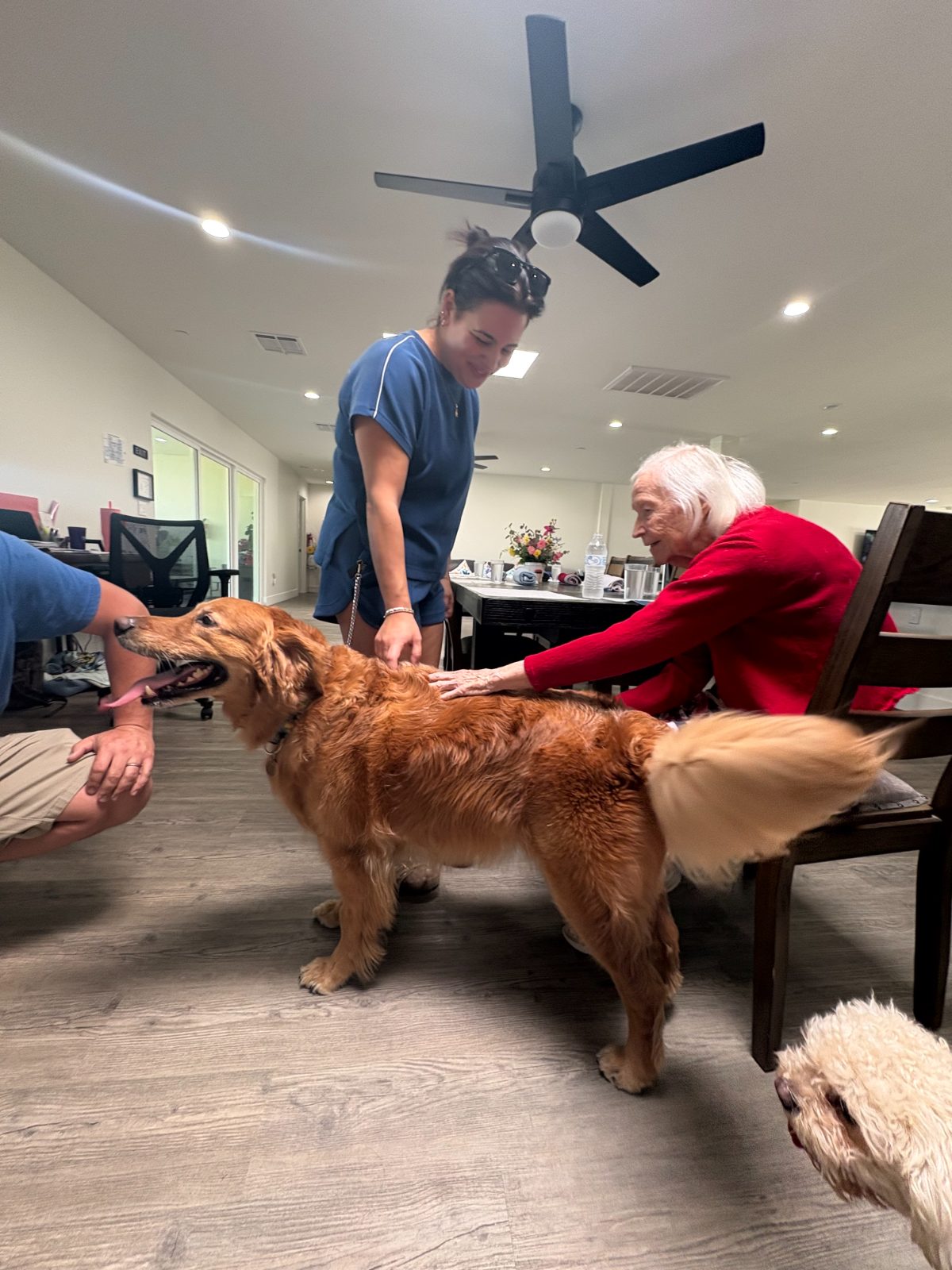
The hardest thing we hear from families is not about the move. It's about the visits afterward. “I drove forty minutes, she didn't know who I was, and I sat there for an hour not knowing what to say.” People stop visiting not because they don't care, but because the visits hurt and they don't know how to make them better.
There is a better way to visit someone with dementia. It takes a little planning and a shift in what you're hoping to get out of it.
Change what a good visit means
Most of us measure a visit by whether the other person remembers it. With dementia, that's the wrong measure. Your mother may not remember that you came on Tuesday. But the feeling of the visit, the warmth, the calm, the sense of being loved, outlasts the memory of it. Research on emotional memory in dementia is clear on this: the mood persists after the event is forgotten.
So the goal of a visit is not to be remembered. It's to leave your person feeling better than you found them. That's achievable at every stage of the disease.
Your mother may not remember that you came. The feeling of the visit lasts longer than the memory of it.
Before you go
Pick the right time. Ask the caregivers when your person is at their best. For most people with dementia, that's mid-morning or right after lunch. Late afternoon is often the worst window because of sundowning.
Bring something to do. An empty hour is hard for both of you. A photo album, a familiar song on your phone, a simple snack to share, a magazine with big pictures, a hand lotion with a scent they like. Something that gives your hands and the conversation a place to go.
Keep it short. Thirty to forty-five minutes is plenty. A good short visit beats a long one that ends in exhaustion. You can come more often if you stay less long.
Come alone or in twos. A crowd of grandchildren is lovely in theory and overwhelming in practice. If the whole family wants to visit, stagger it.
When you arrive
Approach from the front, at eye level. Make eye contact, smile, and say your name and relationship as if it's the most natural thing in the world: “Hi Mom, it's Sarah, your daughter.” Don't quiz: “Do you know who I am?” puts a person on the spot and often ends badly.
Match their reality. If your father thinks it's 1975 and asks about his mother, don't correct him. Ask him to tell you about her. Correcting a person with dementia rarely reorients them; it usually just upsets them. Enter their world rather than dragging them into yours.
Use touch. Holding a hand, rubbing a shoulder, applying lotion. Touch communicates when words don't, and many people in care homes are touched only for practical reasons, which is a loss.
Slow down. Speak in short sentences. Ask one question at a time, and give it time to land. Silence is fine. You don't need to fill it.
What to talk about
Long-term memory lasts longest, so the past is usually safer ground than the present. Childhood, early marriage, the first house, old jobs. Ask open questions that don't have a right answer: “Tell me about the farm,” not “What was the name of the farm?”
Avoid topics that require the person to track recent events or hold several things in mind at once. Family logistics, the news, who is doing what next month. These tend to produce anxiety rather than conversation.
Music is the most reliable tool there is. Songs from a person's teens and twenties reach parts of the brain that dementia touches last. If you don't know what they loved, ask the siblings, or the caregivers, or just try a few from the right decade.
Leaving
Don't announce a long goodbye. Drawn-out departures can trigger distress, especially the “take me with you” moment that so many families dread. A warm, brief “I love you, I'll see you soon,” and a smooth handoff to a caregiver works better than a ten-minute wind-down at the door.
If your person becomes upset when you leave, tell the staff. Good caregivers have ways of redirecting at that moment, and it helps if they know it's coming.
Be kind to yourself afterward
Some visits will be hard no matter what you do. Your person may be having a bad day, or may not engage at all. That's the disease, not a verdict on the visit or on you. You showed up. The feeling of being visited lands even when nothing else does.
The bottom line
Visit at the person's best time of day, bring something to do, keep it short, don't quiz or correct, and lean on touch and music. Judge the visit by how your person feels when you leave, not by what they remember.
If visits have gotten hard enough that you've started avoiding them, talk to the home. The caregivers see your person every day and usually know exactly what will work.