Families plan for memory loss. They rarely plan for the fall, and the fall is frequently what changes everything. A hip fracture at eighty-two is not an orthopedic event; it's a hospitalization, a delirium episode, a functional decline, and often a permanent change in where and how someone lives.
About one in four adults over sixty-five falls each year. For people living with dementia, the rate is roughly double, and the outcomes are worse — longer recoveries, higher complication rates, more delirium. The encouraging part is that most of the contributing factors are modifiable, and a meaningful share of falls are preventable with unglamorous, specific changes.
Why Dementia Raises the Risk
Gait and balance change with the disease. Many dementias alter walking directly — shorter steps, wider stance, hesitation at thresholds. In Lewy body dementia and Parkinson's-related dementia, motor symptoms are central rather than incidental.
Visuospatial processing degrades. Judging depth, distance, and edges becomes unreliable. A dark rug can read as a hole. A shiny floor can read as wet. Contrast changes at a doorway can cause someone to stop or step oddly.
Judgment about capability slips. Someone may attempt to stand and walk without their walker not out of defiance but because they no longer accurately assess their own stability.
Dual-tasking collapses. Walking while talking, or walking while carrying something, requires cognitive bandwidth that dementia consumes. Many falls happen mid-conversation.
Medications compound everything. Sedatives, sleep aids, antipsychotics, antidepressants, blood pressure medications, and anticholinergics all raise fall risk. Someone on four or more medications is at meaningfully higher risk, and polypharmacy is common in this population.
A dark rug can read as a hole. A shiny floor can read as water. Much of fall prevention is fixing what the eyes are telling a person that isn't true.
The Environmental Fixes That Matter Most
Home safety checklists tend to be long and generic. These are the changes with the highest return:
- Lighting, especially at night. Motion-activated nightlights along the path from bed to bathroom. Most falls in this population happen on that route.
- Remove throw rugs entirely. Not secure them. Remove them.
- Contrast at transitions. Mark step edges and doorway thresholds with contrasting tape or paint so they're visible.
- Grab bars where weight is actually shifted — beside the toilet and inside the shower. Towel bars are not grab bars and fail under load.
- Non-slip surfaces in bathrooms and kitchens; avoid high-gloss floor finishes, which look wet.
- Chair and bed height. Seats that are too low make standing a lurch rather than a lift.
- Clear the walking paths of cords, pet bowls, magazine baskets, and furniture that has quietly migrated.
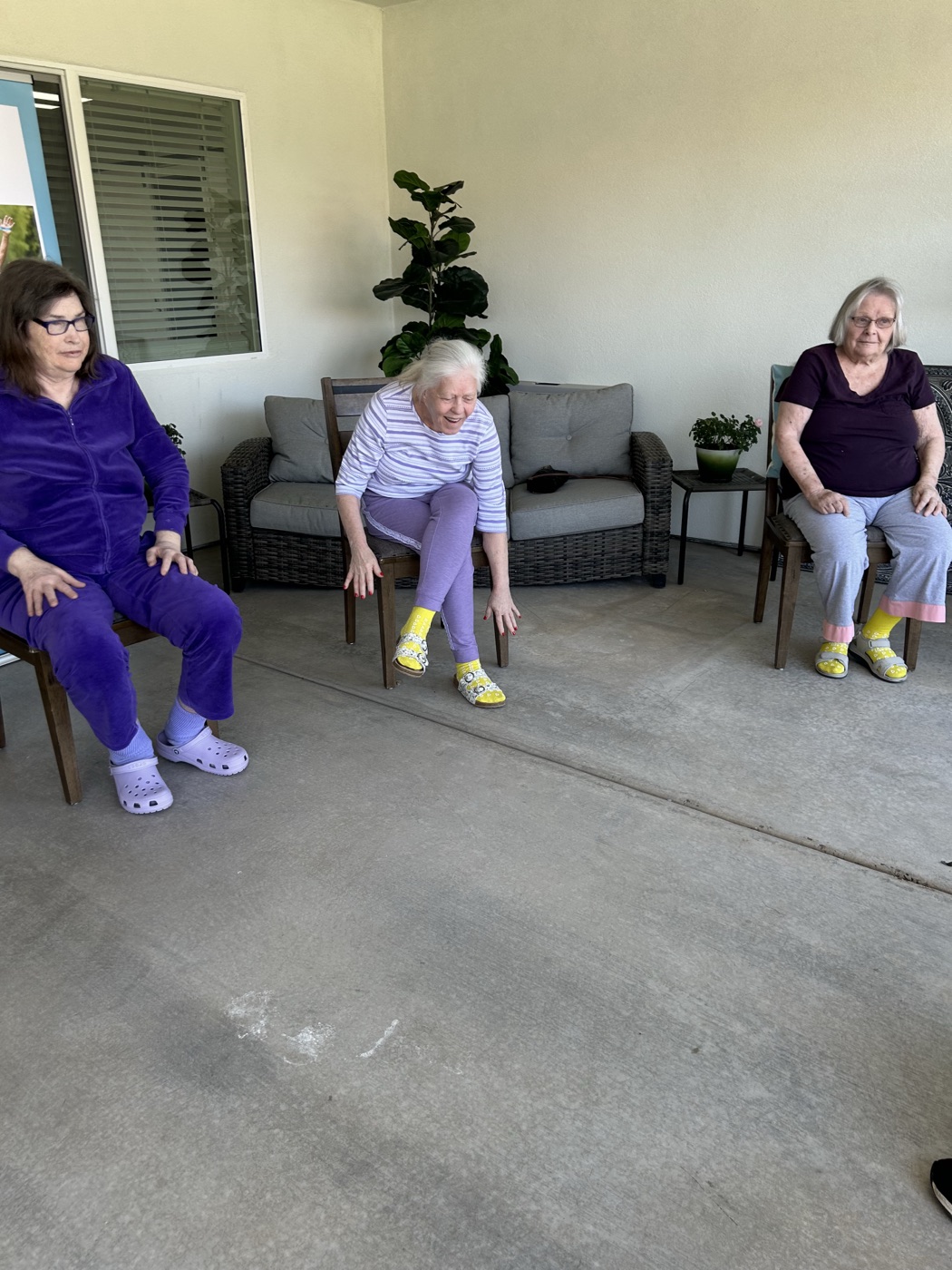
- Proper footwear. Supportive, closed-back, non-slip. Socks on hard floors and loose slippers are frequent culprits.
The Clinical Side of Prevention
Environment is half of it. The other half is medical, and it's the half families rarely pursue systematically.
A medication review specifically focused on fall risk is the single highest-value intervention. Deprescribing where possible — particularly sedatives and anticholinergics — reduces falls measurably.
Orthostatic blood pressure should be checked lying, sitting, and standing. A significant drop on standing is common, easily missed, and directly causes falls.
Vision and hearing. Outdated prescriptions, untreated cataracts, and hearing loss all raise risk. Bifocals in particular can be problematic on stairs.
Vitamin D, calcium, and bone density. Preventing the fracture matters as much as preventing the fall.
Feet. Overgrown nails, bunions, neuropathy, and pain all alter gait. Podiatry is underrated in fall prevention.
Strength and balance work. Progressive resistance and balance training reduce falls in older adults, including many with mild to moderate dementia. It has to be adapted and supervised, but capability is frequently underestimated.
After a Fall
Every fall deserves evaluation, even one that appears harmless. Older adults on blood thinners can develop a subdural hematoma from a minor head impact, sometimes with symptoms appearing days later. New or worsening confusion after a fall should be treated as a red flag, not attributed to the dementia.
A fall is also diagnostic. It signals that something changed — a new medication, an infection, worsening vision, pain, progression. The most useful question after a fall isn't “how do we prevent the next one” but “what is different now?”
Fear of falling deserves attention too. After a fall, many people restrict their own activity, which weakens them, which raises fall risk further. Breaking that cycle with supervised activity matters.
What a Well-Designed Setting Provides
Purpose-built environments handle much of this structurally. Single-story layouts remove stairs. Consistent lighting, matte flooring, contrast at transitions, grab bars, and clear paths are built in rather than retrofitted.
Staffing ratio matters more than any single feature. A large share of falls happen during unassisted transfers — getting out of bed, standing from a chair, moving to the bathroom — when someone doesn't wait for help. In a home with ten residents, help is usually already nearby, and a caregiver who knows a resident's pattern anticipates the 2 a.m. bathroom trip rather than responding to it.
On-site clinical oversight closes the loop: medication reviews happen routinely, orthostatic checks are simple to perform, and a change in gait gets noticed by someone who saw the person walk yesterday.
The bottom line
Fall prevention is not one intervention; it's a stack of small ones. Fix the lighting and the floors, get a medication review aimed specifically at fall risk, check orthostatic blood pressure and vision, keep the person moving, and treat every fall as information about what changed.
If falls are what's making home feel unsafe, that's a common and legitimate reason families start looking at memory care. We're glad to talk through what a purpose-built environment changes.